
Flared leggings combine a close fit through the upper leg with a wider opening below the knee. For a private label brand, that familiar outline creates an important development challenge: the garment must look balanced while remaining comfortable, opaque and consistent across sizes.
If you are looking for a private label flared leggings manufacturer, begin with fit and fabric requirements before choosing colours or placing a bulk order. This guide helps Australian and USA activewear brands prepare a product brief, evaluate samples and request a useful manufacturing quotation.
Planning a flared leggings collection? Request a manufacturing quotation with your design reference, quantity and delivery country, or discuss the brief on WhatsApp.
Where is the flared leggings trend supported by Google data?
In its June 26, 2026 Australian fashion search report, Google reported a 120% increase in search interest for “flare leggings” over the preceding three months. The location and period matter: this is an Australian trend signal from that report, not a live September measurement or evidence of the same increase in the USA.
For Australian brands, the finding provides a reason to investigate the category. USA brands can use it as product inspiration while separately testing demand with their own audience. Search interest does not establish a profitable retail price, a suitable size range or the number of units a new brand will sell.
A sensible response is to develop a clear product concept, validate the sample and learn from customer feedback before expanding the range. The manufacturing brief should translate the idea into measurable requirements.
Flared leggings, yoga pants or wide-leg trousers?
These names sometimes overlap in consumer searches, but they should not be interchangeable in a production brief. Flared leggings generally fit closely through the hips and thighs before widening lower down. Wide-leg trousers have a different volume distribution. “Yoga pants” can describe several silhouettes and does not define one pattern.
Show the intended front, side and back shape. Mark where the flare starts, how wide the hem should be and whether the waistband is straight or crossover. If you use a reference image, explain which features you want to develop into your own original design. Avoid leaving the factory to infer the entire garment from a styling photograph.
Also define the main use. A studio-to-street style, a relaxed lounge product and an exercise-focused garment may need different fabric and fit priorities. Decide which benefits you can support through sample evaluation rather than adding every performance term to the specification.
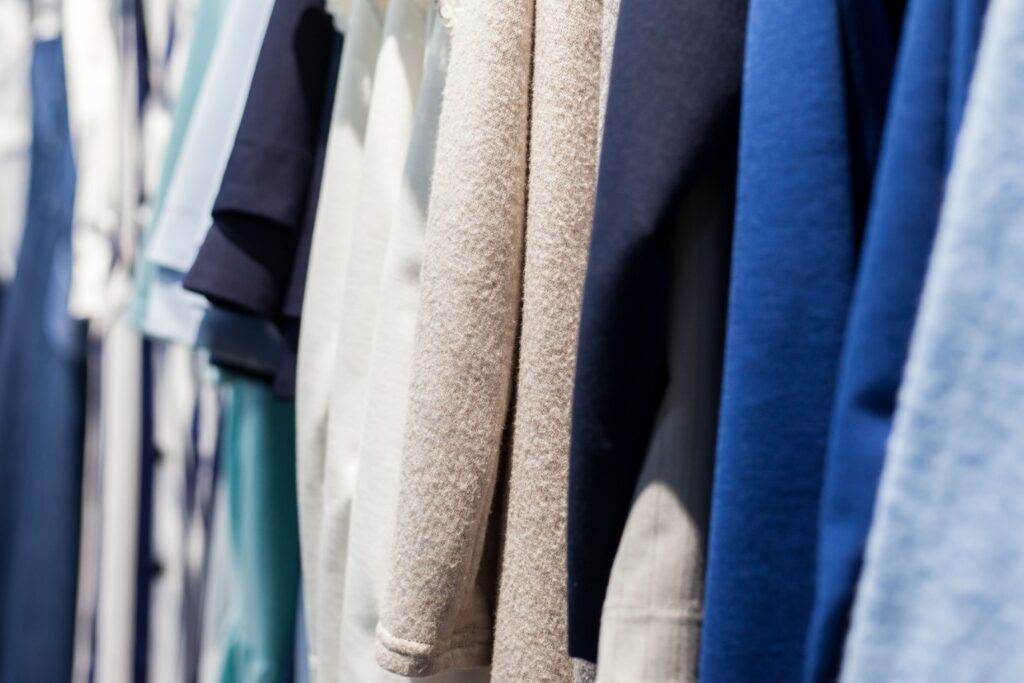
Choose fabric by behaviour, not a fashionable name
A promising fabric must work in the finished garment. Ask for composition, weight, stretch direction, surface finish, colour options and the proposed care instructions. Compare physical swatches and a sewn sample. Softness in a hand sample does not automatically establish recovery, opacity or durability.
Stretch and recovery
Stretch describes how the material extends; recovery concerns how it returns after extension. Both matter for the knees, seat and waistband. Specify the activities and wear duration you want the sample to support, then evaluate how it looks after movement and rest.
Polyester-elastane and nylon-elastane blends are options to discuss, subject to availability and the desired finish. Do not choose solely by the fibre names or elastane percentage. Knit construction, finishing, fit and the actual fabric sample also influence the result.
Opacity and colour
Check the intended fabric in the intended colour and size. A dark sample does not establish how a pale colourway will perform. Assess opacity while standing, bending and stretching, under consistent lighting and with the intended fit. Record the test conditions so feedback is reproducible.
Avoid assuming that a heavier fabric is automatically opaque in every design. Excessive stretch caused by an unsuitable pattern can change coverage. Fabric and fit need to be reviewed together before approving any customer-facing performance description.
Surface feel and care
Compare brushed and smoother surfaces according to the intended product. Ask how the fabric behaves after the agreed laundering assessment and ordinary contact with seating, bags or other garments. If pilling, colourfastness or another performance requirement is important to your positioning, discuss the suitable test and acceptance criteria before bulk approval.
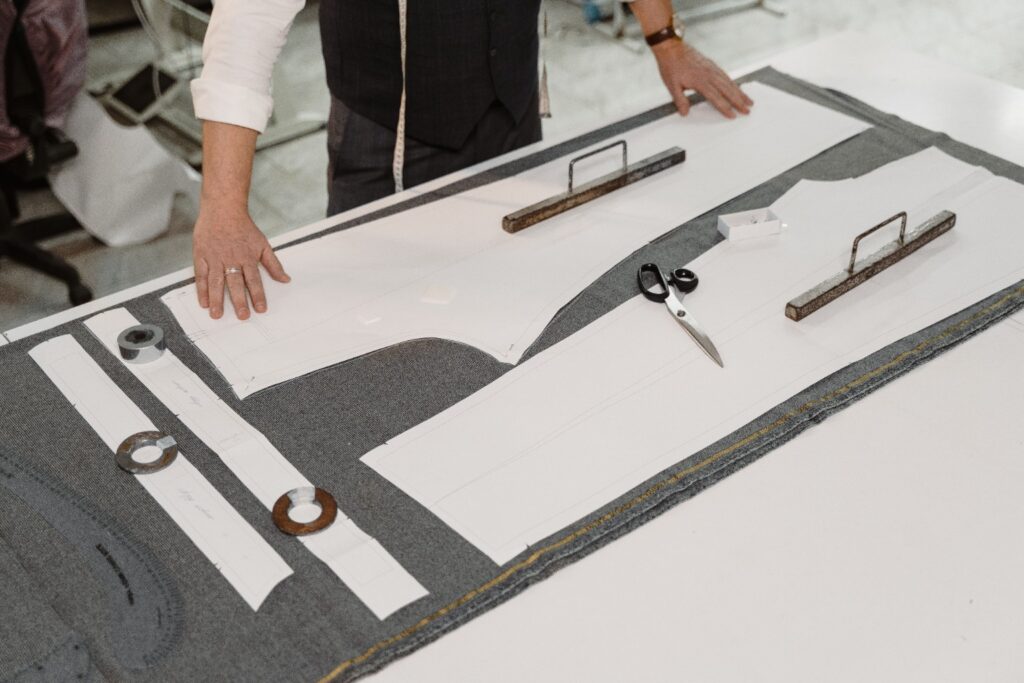
The measurements that define a good flare
Flared leggings need more detail than waist, hip and total length. The relationship between the knee position, flare opening and inseam determines how the silhouette looks on different wearers. A small change in one area can alter the apparent balance of the whole garment.
- Waistband height and opening: establish the intended hold and shape.
- Front and back rise: review coverage while standing, sitting and bending.
- Hip and thigh: specify the desired fit without relying only on size labels.
- Knee position and width: identify where the fitted section transitions into the flare.
- Hem opening: define the flare rather than describing it as “slight” or “wide.”
- Inseam: decide the intended length with the footwear your customers are likely to use.
- Gusset and seam placement: review comfort and appearance in movement.
Specify how each measurement is taken, including whether a dimension is measured flat and relaxed. Agree on acceptable tolerances with the manufacturer. A size chart with ambiguous measuring points creates avoidable disagreements during sample review and inspection.
Plan inseams and grading around real customers
A single inseam may not serve all target customers equally well. A hem that drags can look untidy, while a shorter length may change the intended silhouette. Consider whether your audience needs a regular length only or separate length options, then check what is commercially practical for the first order.
Grade the pattern deliberately. Simply widening the hem and extending the leg for larger sizes may not preserve the same proportions. Review where the knee falls, how the rise changes and whether the waistband remains comfortable across the proposed range.
For an early collection, test representative sizes rather than relying entirely on one base-size sample. Keep fit notes consistent: identify the sample size, wearer measurements, movement checked and exact correction requested. This makes revisions easier to understand and repeat.
Waistbands, seams and pockets deserve their own approval
The waistband can determine whether customers keep wearing the product. Assess rolling, digging and movement during normal activity. A crossover front introduces additional decisions about overlap, seam position and stability. Check the construction on the wearer instead of judging it only when laid flat.
Discuss seam construction with the supplier for the selected material and use. Inspect seam stretch, thread appearance, bulk and comfort. The best-looking stitch in a close-up image may not be the right choice for every area of the garment.
Pockets also change the pattern. Decide whether you need a small internal pocket or a larger external feature. Test it with the intended item and check whether it distorts the garment. Avoid adding pockets late in development without reviewing the resulting fit and appearance again.
Create a focused sample testing checklist
Use an approval checklist that connects directly to the product promise. For a casual flared legging, comfort, coverage and everyday shape may lead. For an exercise-focused product, movement and seam performance need particular attention. Agree on what can be evaluated through wear trials and what requires a formal test.
- Measure the sample against the latest specification.
- Inspect front, side and back balance while worn.
- Check waistband stability during sitting, walking and bending.
- Review opacity under consistent lighting and realistic stretch.
- Assess knee recovery after repeated movement.
- Check the hem position with the intended footwear.
- Inspect seams and logo placement before and after the agreed care assessment.
- Record findings with clear photographs and revised measurements.
Approve each colour and material combination at the appropriate stage. When a supplier proposes a substitution, ask whether fit, hand feel, opacity or decoration needs a fresh review. Treat the signed-off sample and written specification as a connected reference for production.
Private label branding that works with stretch fabric
A logo should support the garment’s appearance without creating discomfort or restricting stretch. Discuss placement and size before choosing the decoration process. Waistband, hip and lower-leg positions each interact differently with movement and the visual lines of the product.
Request an application sample on the actual fabric. Check whether it cracks, lifts, distorts or becomes uncomfortable during the agreed wear and care assessment. Small lettering may need adjustment to remain legible at the final production size.
Include brand labels, size identification, care information and packaging in the initial brief. Keep claims specific and supported. Natural fibre, recycled content and performance statements should reflect the approved material and available evidence, rather than assumptions based on product appearance.
Understand MOQ, colour splits and the full quotation
Ask whether minimum quantities apply per style, fabric, colour or total order. The number of sizes and colourways can affect the practicality of a small run. A clear quantity matrix helps the manufacturer assess the project without guessing how the total will be divided.
Greyfin Sports lists orders from 20 pieces on its contact page. Confirm whether your proposed flared-legging design, material and colour split can use that minimum. Custom fabrics, trims or other requirements may need a different arrangement, which should be stated in the quotation.
Compare quotations for the same brief. Clarify sample charges, pattern development, revisions, branding, labels, packing and delivery separately. Provide the delivery country and postcode and ask which destination costs are included. A low garment price is not a complete comparison if important services or shipping are excluded.
Build a launch plan around the approval process
Work backwards from the intended launch, allowing time for fabric review, sample development, fit feedback, revisions and bulk production. Confirm the schedule with the supplier after the specification is understood. Avoid promising your customers a delivery date before the production and shipping plan is agreed.
Keep the first range manageable. One well-developed fit can provide a clearer foundation than several silhouettes with unresolved differences. Use customer feedback to decide whether the next development should be a second inseam, another colour or a revised waistband.
Retain your final artwork, measurement chart, approved sample and order breakdown for repeat production. Record any accepted variation. These references help distinguish an intentional product update from an unintended change between orders.
Plan the rest of your activewear collection
Explore our fitness and activewear range for related product categories. For broader sourcing decisions, use our private label activewear manufacturer guide for USA brands alongside this product-specific fit checklist.
Discuss your project with Greyfin Sports
Greyfin Sports is an international apparel manufacturing partner based in Sialkot, Pakistan. Brands in Australia and the USA can submit custom activewear requirements for review. The final product specification, available materials, minimum quantity and schedule are confirmed for the individual project.
Read about our manufacturing and sampling process and browse our apparel range before preparing your enquiry. Explain which decisions are final and where you need material or construction options.
Frequently asked questions
Can I request a crossover waistband or custom inseam?
Include those requirements in the initial design brief. Feasibility, pattern changes and applicable minimums need review before sampling. Provide measurements or clearly marked references rather than a product name alone.
Which fabric is best for private label flared leggings?
There is no single best fabric for every brand. Select according to the intended use, feel, recovery, coverage and care requirements, then approve a complete sample in the chosen material.
Does the Australian search trend prove USA demand?
No. The cited Google report describes Australia and a specific historical period. USA brands should validate their market separately through customer research and their own sales or enquiry data.
Can I start without a complete tech pack?
You can submit sketches, references and initial requirements for discussion. Measurements, materials, construction and branding still need to be clarified before a sample becomes a reliable production reference.
Request a private label flared leggings quote
Send your design reference, target quantity, size and inseam range, preferred fabric, waistband style, logo files and delivery destination. Add the intended use and launch date so the review addresses both the product and your commercial timeline.
Request a custom activewear quotation or send your requirements on WhatsApp.