
Parachute pants depend on proportion, fabric movement and carefully placed details. A roomy leg alone does not create a balanced design. The rise, knee position, pockets, waistband and hem adjustment all influence how the garment looks and feels when worn.
For streetwear brands looking for a custom parachute pants manufacturer, a detailed development brief makes sampling more productive. This guide explains how to turn a reference into an original, production-ready design, compare quotations and prepare an international manufacturing enquiry.
What the Google Trend Signal Actually Says
Google’s June 26, 2026 Australian fashion report identified Australia as the leading country searching for “parachute pants.” That is a location-specific finding from the published report, not proof that the product is the top-selling style today or that USA demand matches Australia.
The useful response for a clothing brand is to investigate the silhouette with its own customers. Determine which fit, fabric and price point they respond to, then test a focused sample. A clear product identity is more valuable than adding every trending feature to one pair of trousers.
USA brands can use international fashion signals for inspiration while validating local interest separately. Existing customer enquiries, fit feedback and purchasing behaviour should guide the launch decision.
Define Parachute, Cargo and Wide-Leg Styles Clearly
These labels overlap in fashion searches but describe different design choices. “Parachute” often refers to a roomy silhouette associated with lightweight woven fabrics and adjustable details. “Cargo” usually describes a pocket feature. “Wide-leg” describes leg volume. None of these words supplies a complete manufacturing specification.
A pair of pants can combine elements from more than one category. Explain the exact relationship you want between waist, hip, thigh, knee and hem. Mark whether the leg should remain wide, taper naturally or gather through an adjustable opening.
Use front, back and side references. Identify which features are essential and which are open for development. Request an original pattern and approved branding rather than reproducing another company’s protected graphics or labels.
Choose Fabric for Drape, Weight and Intended Use
Request physical swatches of the proposed materials. Nylon or polyester woven fabrics may be options for a lightweight direction, while other materials create a different hand feel and structure. Confirm what is actually available for your design, quantity and colour requirements.
Describe whether the garment should feel crisp, fluid, soft or structured. Evaluate how the fabric folds at the knee and gathers at the hem. Consider opacity, lining requirements and how much surface noise is acceptable for the intended wearer.
A fabric photograph cannot communicate these characteristics reliably. Review a swatch first, then assess the complete sample. Do not describe the garment as waterproof or technically protective based only on its appearance; any performance requirement needs suitable specifications and evidence.
The Measurements That Control the Silhouette
Build a measurement chart that explains both size and proportion. Mark how each point is measured and whether dimensions are taken flat, relaxed or extended. Agree the acceptable tolerances with the manufacturer before sample approval.
| Measurement | Why it matters | Sample review |
|---|---|---|
| Waist, relaxed and extended | Defines fit and usable adjustment | Check comfort while sitting and moving |
| Front and back rise | Controls coverage and how the pants sit | Review standing, seated and bending positions |
| Hip and thigh | Establishes the intended volume | Compare the worn shape with the approved reference |
| Knee position and width | Affects leg balance and panel placement | Check movement and side profile |
| Inseam and hem opening | Controls length and the lower-leg silhouette | Assess with intended footwear and hem settings |
“Oversized” should describe a deliberate fit, not unexplained extra fabric. Decide where the volume belongs. A design may need room through the thigh while keeping the waist secure and the rise controlled.
Waistbands and Adjustable Hems Need Testing
Specify the waistband construction, elastic or adjustment method, drawcord position and the desired appearance when worn. Ask how these components work together and whether the proposed arrangement changes comfort or fit across sizes.
For an adjustable hem, define the fully open and gathered appearance. Check whether the adjustment holds during normal movement and whether it creates unwanted bulk. The garment should still look intentional when the customer uses the feature as designed.
Inspect any cord ends, channels and hardware on the complete sample. If you are developing youth apparel, identify that at the start so the supplier can review age-appropriate construction and applicable market requirements. Do not treat an adult design as automatically suitable for a child’s range.
Plan Cargo Pockets Around Function and Balance
Pocket number, depth and position affect both appearance and construction cost. Decide what each pocket is for and how it should sit when empty and in use. A visually striking pocket can still be awkward if its opening is too narrow or its contents distort the leg.
Mark pocket positions from stable measurement points rather than estimating them from photographs. Specify flap shape, closure, stitching and any reinforcement requirements. Review access while standing and sitting, and check whether the pocket interferes with the intended drape.
If your first design has many pockets and panels, ask which details contribute most to the product identity. Simplifying a nonessential feature can make approval clearer without removing the defining character of the garment.
Create a Tech Pack the Manufacturer Can Quote
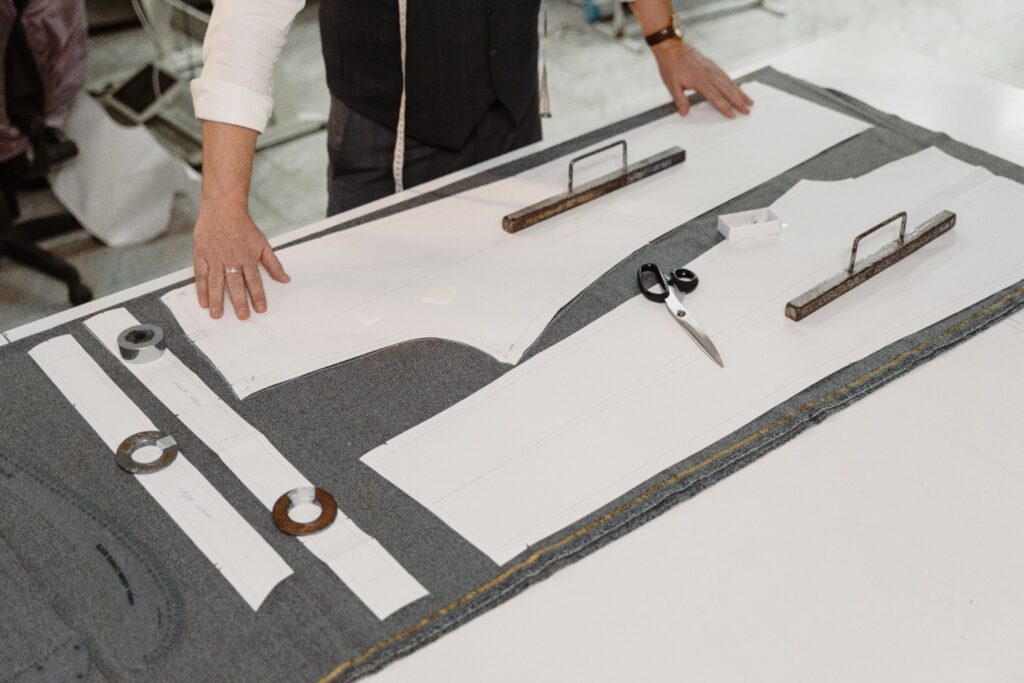
A practical tech pack combines design, measurements, materials and finishing details in one dated reference. It should make important decisions visible and identify any items that still need discussion. A complete file can prevent quotations based on different assumptions.
- Front, back and side sketches with detail views.
- Measurement chart, size range and intended fit.
- Fabric composition or reference, weight and finish preferences.
- Waistband, pocket, panel, seam and hem specifications.
- Drawcords, hardware, closures and trim colours.
- Logo artwork, dimensions and placement.
- Brand labels, size and care labels, hang tags and packing.
- Quantity by style, colour and size, plus destination and target date.
Use our clothing tech pack guide if you are still preparing the documentation. Reference images can start the conversation, but the final decisions need to be recorded before bulk approval.
Evaluate the First Sample in a Repeatable Way
Review the sample on a wearer who represents your customer. Compare the front, back and side profiles before focusing on small details. Then check measurements, movement, pocket function, adjustments, construction and branding.
- Measure the garment against the current specification.
- Check the waist and rise while standing and sitting.
- Walk, bend and use the pockets to assess practical comfort.
- Compare open and adjusted hem settings.
- Inspect seam appearance, panel symmetry and hardware.
- Review the garment after the agreed care assessment.
- Record precise corrections and approve a revised reference.
Keep observations specific. “Reduce the hem opening to the revised chart” gives a clear action; “make the pants less baggy” can mean several different things. Group your revisions into one dated list so the next sample addresses a consistent brief.
How to Compare Costs and Minimum Order Quantities
Ask suppliers to quote the same materials, pocket layout, trim specification and quantity breakdown. Extra panels, complex pockets, custom hardware and additional decoration can change the work involved. A basic trouser quotation is not directly comparable with a highly detailed design.
Clarify development fees, sample charges, revision terms, labels, packaging and shipping. Confirm the currency, validity and payment milestones. For international delivery, ask which costs are included and which destination charges remain separate.
Greyfin Sports lists custom manufacturing from 20 pieces, subject to the product and project requirements. Confirm the actual minimum for your proposed parachute pants, especially where custom materials, colours or hardware are involved. The final quotation should explain how the total is split across sizes and colourways.
Build a Focused Streetwear Capsule
Start with one clear silhouette and a manageable set of variations. Decide whether the pants are the main statement product or part of a coordinated collection. Keep colour, fit and branding decisions consistent with the surrounding garments.
For a capsule that includes outerwear, our private label bomber jacket guide covers shell, lining and trim decisions. For fleece layers, review the custom hoodie manufacturing guide.
Build the schedule around fabric review, sampling, revisions, approval, production and shipment. Confirm feasibility before announcing a fixed customer launch date. Keep approved material references and measurements for repeat orders, and review substitutions before accepting them.
Frequently Asked Questions
Can I develop parachute pants without a completed tech pack?
You can submit references and an initial design brief for assessment. Measurements, materials, pockets, trims and branding still need to be clarified before the sample becomes a production reference.
Are cargo pants and parachute pants the same product?
No. Cargo refers mainly to a pocket design, while parachute describes a broader style direction. A design may combine both, so specify the silhouette and details rather than relying on the name alone.
Can I use my own brand labels and packaging?
Include artwork and packing requirements in the first enquiry. Available options and component minimums are confirmed with the quotation.
Where does Greyfin Sports manufacture?
Greyfin Sports is based in Sialkot, Pakistan. It serves international clothing brands and buyers, including those in the USA and Australia. Provide your delivery destination when requesting a schedule and shipping estimate.
Request a Custom Parachute Pants Manufacturing Review
Explore our cargo pants and shorts range for related construction ideas, then send your proposed parachute-pants silhouette, references, quantity, sizes, material preference and delivery location. Product feasibility is reviewed against your specific brief.
Request a custom pants quotation or discuss your streetwear project on WhatsApp.